A roof provides protection against rain, snow, sunlight, extremes of temperature, and wind. It may contribute to ventilation, views, and access, as well as provide living space.
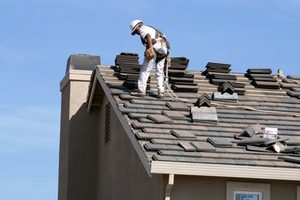
Look for roofing materials that are durable in high-velocity hurricane zones, salt air, and humidity and can withstand a freeze-thaw cycle. Also, avoid a roof material that retains moisture and encourages fungus growth (like wood shingles or shakes).
The roof is the protective covering of a building, shielding it from rain, snow, sunlight, wind, and extremes of temperature. It can be flat or pitched, vaulted, domed, or in a combination of forms. Roofing materials vary, from banana leaves or wheaten straw (which are used in traditional thatches) to asphalt shingles, wood shakes or boards, and tile. The choice of material depends on local availability and aesthetic considerations.
In recent times, membrane roofs, also known as single-ply or built-up roofs, have gained popularity because of their durability and low installation cost. These waterproof membranes are made of layers of either organic or glass-fiber mats saturated with bitumen or asphalt and covered by a layer of felt.
A variety of finishes can be applied to membranes, including stone, copper, galvanized steel, and aluminum sheeting. Lead has long been used around chimneys, walls, and plumbing vents, but it is very expensive.
For a roof with visual appeal, clay or concrete tiles are an excellent choice. Round-topped tiles are a classic feature of Spanish and Florida architecture; flat-style tiles can create French or English styles. Tile is very durable and can last up to a century. It is heavy, however, so the structure must be well insulated to prevent it from adding too much to the structural load of the building. Also, tile roofs require frequent maintenance to keep the moss and algae from overgrowing and reducing their water-repellent properties.
Pitch
Roof pitch is the incline or steepness of your roof, which is important for both structural purposes and because it can determine what type of roofing materials you will need. It also impacts how rainwater and snow are able to shed from the roof. A roof with a low pitch may experience water leaking, which can lead to rot, mold, and mildew within the home. A roof with a steep pitch, on the other hand, is more likely to shed rainwater and snow more quickly.
Depending on your remodeling contractor’s preference, you can find roof pitch by measuring the distance between a rafter and the surface of the roof. However, the most preferred method is to measure the roof from three different locations, which include the underside of a rafter on an overhang near the bottom of the roof (where the soffit vents), the top side of the ridge truss, and the underside of a barge truss on the gable end of the house. The measurements will then be combined to create a roof pitch figure.
Pitch is sometimes referred to as “slope,” though the technical term for it is “rise over span.” The latter is calculated using the roof’s length and width and compares the roof’s vertical stance to its horizontal stance. It is sometimes difficult to calculate for non-gable roofs, so builders and homeowners tend to use the term “pitch” more often.
The roof’s pitch is represented by the ratio of its vertical rise over its horizontal run and is usually expressed as a fraction. A flat roof has a pitch of zero, and a pitched roof is represented by numbers with a division slash or colon, such as 4/12 or 7/12.
The higher the roof’s pitch, the more severe its incline. A steeper pitch is more efficient at shedding rainwater and snow, but it’s also less practical for walking or doing work on the roof and requires extra support to prevent leaking and damage. This is why a professional roofing company should be used to assess the roof pitch before starting any remodeling projects.
Insulation
A roof’s insulation can be a key factor in how well your home stays cool in the summer and warm in the winter. It also helps prevent the overworking of your HVAC system, saving you money and prolonging the life of your unit. There are several options available for insulating your roof, depending on your climate and whether you want to make the project a DIY job or call in professional help.
Foam insulation has higher R-values than fiberglass batt insulation but can be more expensive to install. Rigid foam insulation consists of a foam plastic insulating core pressed between prefabricated facing materials such as OSB, plywood, or other structural sheathing. There are three common types of rigid foam insulation: extruded polystyrene (XPS), expanded polystyrene (EPS), and polyisocyanurate. The latter offers the highest R-value per inch at an affordable price.
Other insulation materials include mineral wool, cotton fiber, and cellulose. Some are fitted between wood-frame studs, joists, and rafters and suit standard framing spacing, while others can be blown into place or poured in place. These are more suitable for irregularly shaped areas and around obstructions.
Some types of insulation are suitable for do-it-yourself installation if you follow the manufacturer’s guidelines and safety precautions. Others require professional installation, especially blankets, boards, and poured-in-place materials. For the best results, ask contractors about their experience installing the type you’re considering and check local building codes before proceeding.
Rigid foam insulation is able to resist moisture better than other types of insulation, making it a good choice for humid environments. They also have a high strength-to-weight ratio. Structural insulated panels, or SIPs, are prefabricated insulating components for the walls, floors, and ceilings of new homes. They reduce construction time and the need for other weatherization tasks such as applying housewrap, vapor barriers, and taping joints.
Some cellulose insulation can be installed by homeowners, but other types should be professionally installed. Cellulose and some spray-in-place insulation should be treated with a fire retardant before use. The flammability of these chemicals can cause irritation to the skin, nose, and throat.
Ceilings
Ceilings are the overhead interior surfaces that cover the upper limits of rooms. They are usually made of plaster or some other material. They have a number of purposes, like providing aesthetics by their shape, texture, and color or hiding certain structural elements or unevenness, and they also act as acoustic conditioning and thermal insulation for the space above the room. They may also conceal some services, like ducts and pipes. They have fire-resistant properties and can accommodate building services like vents, lighting fixtures, sprinkler heads, etc.
The most common type of ceiling is the paneled suspended ceiling, which consists of a grid framework to which a ceiling covering is attached. The ceiling covering can be in the form of tiles, trays, or boards in a wide variety of materials. It can even be acoustic in nature. Services like ventilation ducts, pipe work, and wiring can be concealed by the ceiling covering.
Other types of ceilings include gypsum ceilings, which are made from hydrated sulfate of calcium. It is light and soft and has excellent fire resistance and thermal insulation. It can be molded and is a very cost-effective ceiling. It is also very easy to install electrical components.
Moreover, it can be molded into any design. It is an ideal choice for the ceiling of any room in the house, as it can be painted or stained to match the décor of the interiors. Gypsum ceilings are also less prone to damage from the impact of dropping heavy objects.
Some architects prefer to omit the concept of a finished ceiling altogether and expose the structural members like timber beams, concrete slabs, and space trusses. It creates an admirable architectural look and also allows the thermal mass of the structure to be exploited by installing heating or cooling elements such as chilled beams.
Other kinds of false ceilings that can be used are metal ceilings, which are made of galvanized iron or aluminum sheets. It is highly durable and has a beautiful shine to it. It is also very easy to clean and maintain.